
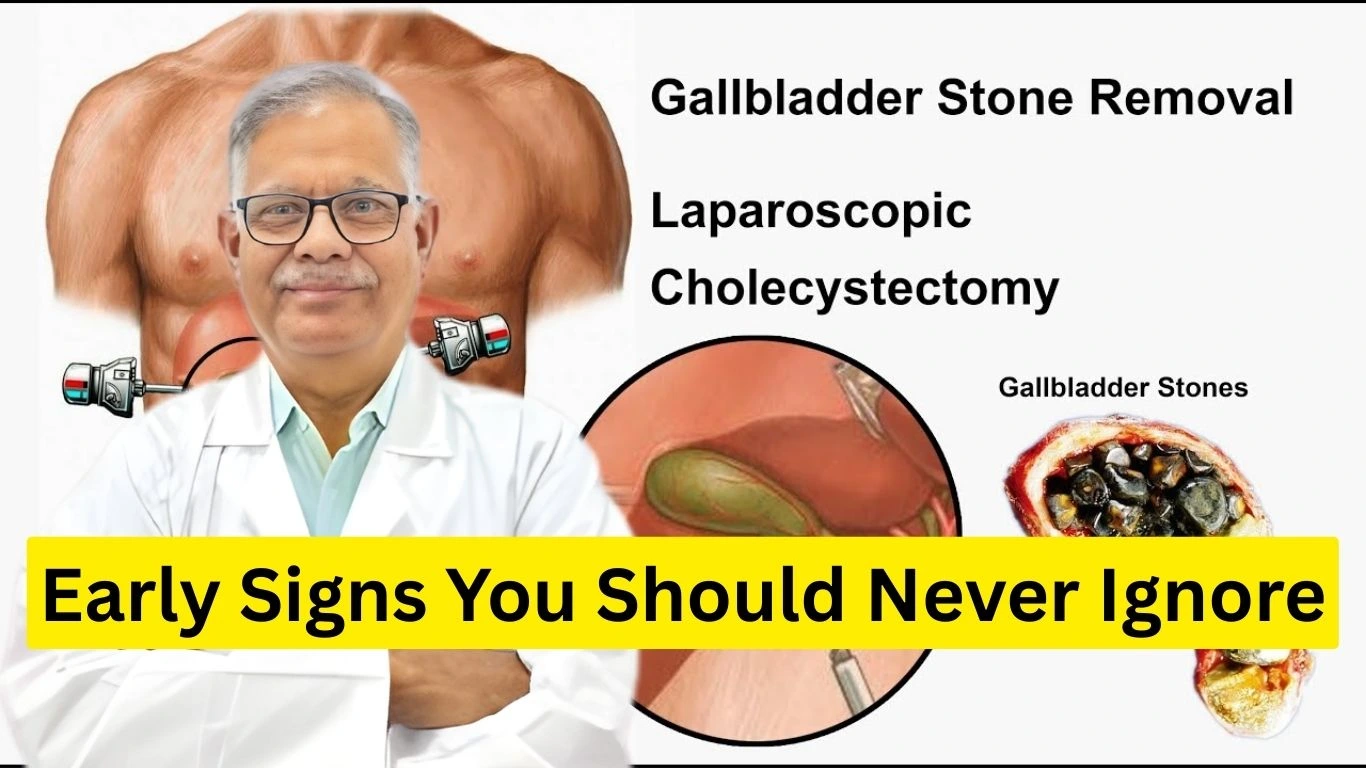
Imagine a sudden, piercing pain in your upper abdomen that radiates toward your shoulder, leaving you breathless and restless. For many, this “ gallbladder attack ” is a terrifying introduction to cholelithiasis , or gallbladder stones. As urban lifestyles in cities like Indore become increasingly fast-paced, the prevalence of gallstones is rising due to changes in diet and sedentary habits.

 Expert Opinion via WhatsApp
While the pain can be debilitating, the good news is that modern medical advancements have made treatment safer and more efficient than ever. If you are seeking gallbladder stone treatment in Indore , it is essential to consult with an expert who understands both the physiological and lifestyle factors at play. Dr. Ashutosh Soni , a Senior Gastrointestinal surgeon in Indore, has dedicated years to treating complex gallbladder cases, ensuring patients return to their normal lives with minimal discomfort.
In this guide, we will explore everything you need to know about gallstones, from identifying the early red flags to understanding why laparoscopic surgery is the gold standard for recovery.
What are Gallbladder Stones? Understanding Cholelithiasis
The gallbladder is a small, pear-shaped organ located just beneath your liver. Its primary role is to store bile, a fluid produced by the liver that helps your body break down fats. However, when the chemical balance of this bile is disrupted, solid particles begin to form. These hardened deposits are what we call gallstones.
There are two primary types of gallstones:
- Cholesterol Stones: These are the most common type, appearing yellow in color. They form when there is too much cholesterol in the bile.
- Pigment Stones: These are dark brown or black stones that form when the bile contains too much bilirubin (often associated with liver cirrhosis or blood disorders).
Recognizing the Red Flags: Symptoms of Gallbladder Stones
Not all gallstones cause symptoms immediately. “Silent stones” may exist for years without detection. However, when a stone blocks a bile duct, it triggers what is known as biliary colic .
The most common symptoms include:
- Intense Pain: A sharp, steady ache in the upper right abdomen or the center of the belly.
- Referred Pain: Pain that spreads to the right shoulder or between the shoulder blades.
- Digestive Distress: Nausea, vomiting, and bloating, particularly after eating heavy or fried meals.
Table 1: Gallstone Pain vs. Regular Indigestion
| Feature | Gallstone Pain | General Indigestion |
|---|---|---|
| Location | Upper right abdomen/Right shoulder | Lower chest or upper stomach |
| Duration | 30 minutes to several hours | Usually subsides within an hour |
| Trigger Foods | High-fat, greasy, or heavy meals | Spicy or acidic foods |
| Relief Methods | Often requires medical intervention | Antacids or burping |
Why Do They Form? Primary Causes and Risk Factors
The formation of gallstones is often a combination of genetics and lifestyle. In the Malwa region and Indore specifically, the local diet—often rich in fats and oils—can contribute significantly to the high volume of cases seen by local specialists.
Key risk factors include:
- Biological Factors: Women are statistically more likely to develop stones, especially those who have been pregnant or use hormone replacement therapy. Age (over 40) and family history also play roles.
- Lifestyle Factors: Obesity is a major risk factor. Conversely, rapid weight loss can also cause the liver to secrete extra cholesterol, leading to stone formation.
- Medical Conditions: Diabetes and certain blood disorders increase the likelihood of cholelithiasis.
How are Gallstones Diagnosed?
If you suspect you have gallstones, a clinical diagnosis is the first step.
- Abdominal Ultrasound: This is the “gold standard” and the most common tool used to visualize stones.
- CT Scan or MRI (MRCP): These advanced imaging techniques are used if the surgeon suspects stones have moved into the bile ducts.
- Blood Tests: These help identify signs of infection, jaundice, or pancreatitis (inflammation of the pancreas).
Treatment Options: From Management to Surgery
Many patients ask if stones can be “dissolved” with medication. While some drugs exist, they are rarely effective for cholesterol stones and do not prevent new stones from forming. “Gallbladder flushes” or home remedies are often dangerous and can cause a stone to get stuck in the duct, leading to an emergency.
Surgical intervention—specifically the removal of the gallbladder—is the standard of care. According to Dr. Ashutosh Soni, a Senior Gastrointestinal surgeon, delaying surgery when symptoms are present often leads to complications like Cholecystitis (inflammation of the gallbladder) or life-threatening Pancreatitis. Since the gallbladder is not an essential organ, you can live a perfectly healthy life without it.
Laparoscopic Cholecystectomy: The Modern Gold Standard
Today, gallbladder removal is performed using Laparoscopic Cholecystectomy , commonly known as “keyhole surgery.” Instead of one large incision, the surgeon makes four tiny openings in the abdomen.
- Minimal Scarring: The incisions are so small they often require only a single stitch.
- Faster Recovery: Most patients return to desk jobs within 3 to 7 days.
- Reduced Pain: Post-operative discomfort is significantly lower than traditional open surgery.
Table 2: Traditional Open Surgery vs. Laparoscopic Surgery
| Criteria | Open Surgery | Laparoscopic Surgery |
|---|---|---|
| Hospital Stay | 3–5 days | 1 day (often daycare) |
| Recovery Time | 4–6 weeks | 1 week |
| Pain Level | Moderate to High | Minimal |
| Scarring | Large 5–7 inch scar | Four tiny marks |
Life After Gallbladder Removal
After surgery, your liver continues to produce bile; it simply flows directly into the small intestine instead of being stored. In the first few weeks, you may be advised to follow a low-fat diet to allow your digestive system to adjust. Most patients find they can return to their regular eating habits within a month without any long-term side effects.
Why Choose Indore for Gallbladder Treatment?
Indore has emerged as a premier medical hub in Central India, offering world-class infrastructure for gastrointestinal health. The city is home to advanced laparoscopic centers equipped with high-definition imaging systems.
The presence of highly skilled specialists like Dr. Ashutosh Soni ensures that patients in the Malwa region have access to the same level of care found in global medical centers. His expertise in minimally invasive techniques has made laparoscopic cholecystectomy in Indore a routine, safe, and highly successful procedure.
Cost of Gallbladder Stone Surgery in Indore
The gallbladder surgery cost in Indore varies based on several factors:
- The type of hospital (private vs. semi-private).
- The patient’s overall health and the complexity of the case.
- Insurance coverage: Most major health insurance providers and Mediclaim policies cover laparoscopic cholecystectomy, significantly reducing out-of-pocket expenses.
Frequently Asked Questions (FAQs)
Q1: Can gallstones be cured without surgery?
No, surgery is the only definitive cure for symptomatic gallstones. Non-surgical methods have a very high failure and recurrence rate.
Q2: What happens if I ignore gallbladder stones?
Ignoring symptoms can lead to severe complications, including gallbladder rupture, jaundice, or acute pancreatitis, which can be life-threatening.
Q3: Is the surgery covered by health insurance?
Yes, most insurance plans cover gallbladder removal as it is considered a medically necessary procedure.
Q4: How long is the recovery period after laparoscopic surgery?
Most patients can walk the same day and return to light work within a week.
Q5: What diet should I follow to prevent more stones?
Focus on a high-fiber diet with plenty of fruits, vegetables, and whole grains while limiting saturated fats.
Conclusion & Next Steps
Don’t live with the pain or wait for an emergency. If you are experiencing symptoms, seek a professional evaluation immediately.
Schedule a consultation with Dr. Ashutosh Soni in Indore today for expert evaluation and personalized care.
Trying my luck at winwincasino777 tonight! Hope those lucky 7s are on my side. Wish me the best!